
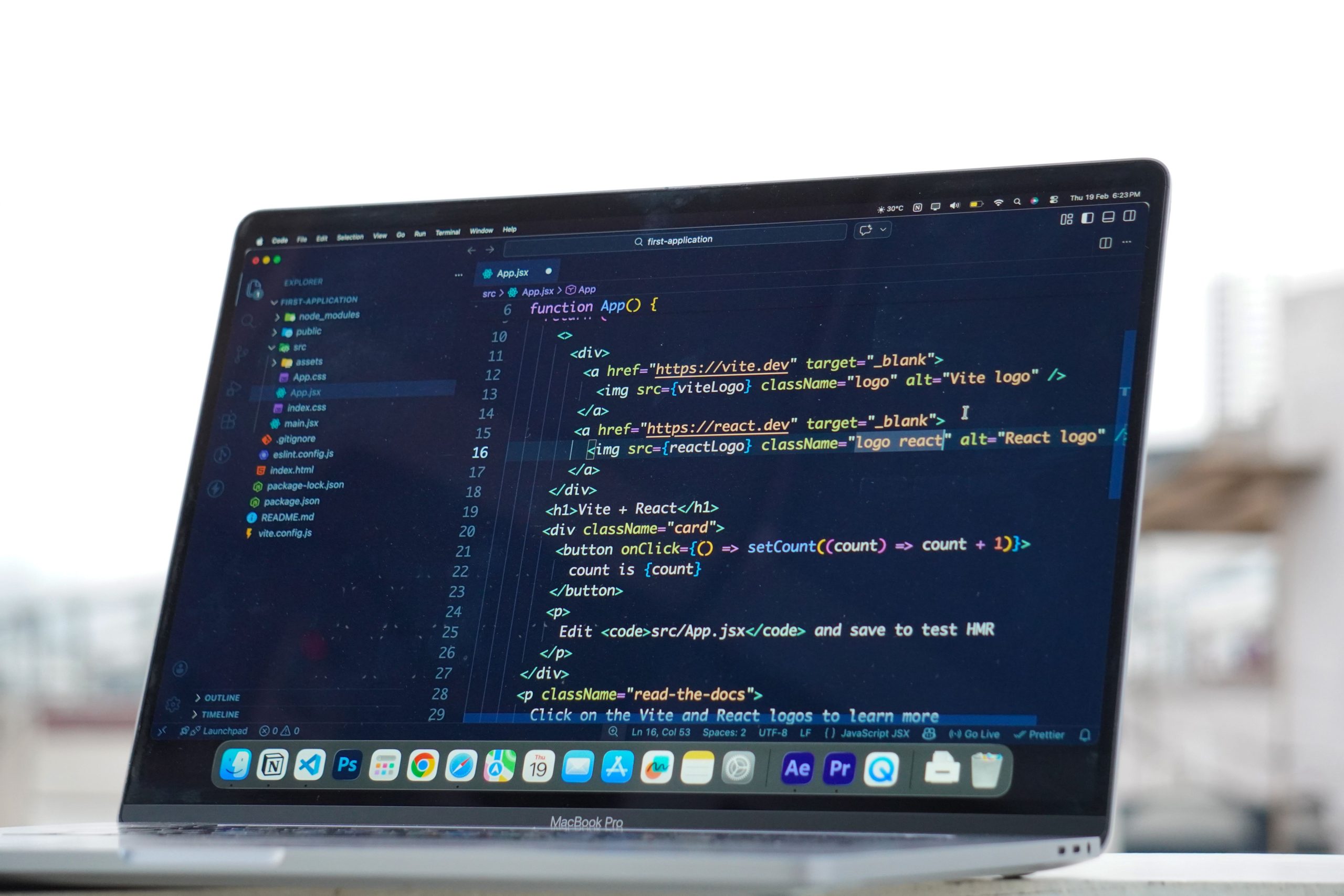
Cybersecurity company Wyoming
Cybersecurity has become an essential part of operating a modern business. As organizations increasingly depend on websites, cloud platforms, mobile applications, business software, digital payment systems, customer portals, and connected devices, protecting digital systems and information has become a critical business requirement.
Deejoft is a technology company providing cybersecurity services in Wyoming and supporting businesses with security testing, vulnerability assessment, application security, cybersecurity consulting, risk assessment, security monitoring, and technology security solutions.
Our approach combines cybersecurity with software development, artificial intelligence, automation, data science, and digital transformation. This broader technology perspective allows us to assess security not only from the perspective of individual vulnerabilities but also from the perspective of how applications, users, infrastructure, APIs, databases, and business processes interact.
Whether you operate a startup, small business, SaaS company, enterprise organization, educational institution, e-commerce business, or technology company, Deejoft can help you identify security risks and strengthen your digital environment.
What Is Cybersecurity?
Cybersecurity refers to the practices, technologies, processes, and controls used to protect computers, networks, applications, systems, and information from unauthorized access, disruption, misuse, or compromise.
Modern cybersecurity can involve several areas, including:
- Application security
- Network security
- Cloud security
- Identity and access management
- Data protection
- Vulnerability management
- Penetration testing
- Security monitoring
- Incident response
- Security awareness
- Risk management
- API security
- Mobile application security
- Web application security
Cybersecurity is not limited to installing antivirus software. A comprehensive security strategy considers the entire digital environment and the ways attackers could potentially gain access to systems or sensitive information.
Cybersecurity Services in Wyoming
Deejoft provides cybersecurity services designed to help organizations understand their security posture and address identified weaknesses.
Our services can include:
- Cybersecurity assessments
- Vulnerability assessments
- Web application security testing
- Mobile application security testing
- API security testing
- Penetration testing
- Authentication testing
- Authorization testing
- Security configuration reviews
- Security consulting
- Risk assessment
- Security architecture review
- Security documentation
- Remediation guidance
- Security awareness support
The exact scope of an engagement depends on the systems being assessed and the organization’s objectives.
Web Application Security
Web applications are common targets for cyberattacks because they are often exposed directly to the internet.
A web application may contain authentication systems, customer information, payment functionality, APIs, administrative dashboards, databases, and other sensitive components.
Deejoft can assess web applications for common security weaknesses and implementation issues.
Testing may examine areas such as:
- Authentication
- Authorization
- Session management
- Input validation
- Access controls
- File uploads
- API endpoints
- Error handling
- Security headers
- Business logic
- Data exposure
- Configuration
- Dependency risks
The purpose of authorized security testing is to identify weaknesses so they can be addressed before they are exploited.
Web Application Penetration Testing
Penetration testing is an authorized security assessment designed to identify and validate vulnerabilities in a system.
A web application penetration test can examine the application’s externally accessible functionality and, where authorized, authenticated areas.
Testing may involve:
- Reconnaissance
- Application mapping
- Authentication testing
- Access-control testing
- Input validation testing
- Session testing
- API testing
- Business-logic testing
- Configuration review
- Vulnerability validation
- Reporting
Testing should always be conducted with appropriate authorization and within an agreed scope.
API Security Testing
APIs are fundamental to modern software applications.
Mobile applications, web applications, SaaS platforms, payment systems, and third-party integrations often communicate through APIs.
An insecure API can expose sensitive information or allow unauthorized actions.
Deejoft can assess APIs for issues involving:
- Authentication
- Authorization
- Access controls
- Rate limiting
- Input validation
- Data exposure
- Token handling
- Endpoint security
- Business logic
- Error handling
API security testing can be particularly important for organizations developing modern cloud-based applications.
Mobile Application Security
Mobile applications can process sensitive customer, business, financial, or personal information.
Deejoft can assess mobile applications for security weaknesses across their application logic, authentication processes, APIs, local storage, communications, and other relevant components.
Mobile application security testing can examine:
- Authentication
- Session handling
- API communication
- Data storage
- Encryption implementation
- Application permissions
- Network communication
- Certificate validation
- Sensitive data exposure
- Application configuration
Testing methodology can vary depending on whether the application is developed for Android, iOS, or a cross-platform environment.
SaaS Security
Software-as-a-Service platforms often handle significant amounts of customer information and business data.
A SaaS application may include multiple organizations, user roles, administrative accounts, APIs, databases, integrations, and payment systems.
Security testing should therefore consider not only individual features but also how different users and organizations are separated.
Deejoft can assess SaaS applications for issues involving:
- Tenant isolation
- Role-based access control
- Authentication
- Authorization
- Session management
- API security
- Administrative interfaces
- Data exposure
- File handling
- Account management
- Business logic
Cloud Security
Cloud platforms have changed the way organizations build and operate technology infrastructure.
Cloud environments can provide flexibility and scalability, but they also require appropriate configuration and access controls.
Cloud security assessments may consider:
- Identity and access management
- Permissions
- Storage configuration
- Network configuration
- Secrets management
- Logging
- Monitoring
- Encryption
- Infrastructure configuration
- Application deployment
- Backup configuration
The appropriate security controls depend on the cloud environment and architecture being used.
Cybersecurity Risk Assessment
A cybersecurity risk assessment helps an organization understand potential threats and vulnerabilities and consider their potential impact on business operations.
A risk assessment can examine:
- Critical systems
- Sensitive information
- User accounts
- Applications
- Infrastructure
- Third-party services
- Business processes
- Existing security controls
The results can help organizations prioritize security improvements.
Vulnerability Assessment
A vulnerability assessment is a structured process for identifying potential security weaknesses.
It can involve automated scanning, manual validation, configuration review, application testing, and other techniques.
Deejoft can help organizations identify vulnerabilities across appropriate systems within an agreed scope.
Potential findings can include:
- Outdated software
- Misconfigured services
- Weak access controls
- Exposed systems
- Insecure configurations
- Application vulnerabilities
- API weaknesses
- Authentication issues
- Data exposure
Identified vulnerabilities can then be prioritized according to factors such as severity, exposure, business impact, and exploitability.
Cybersecurity for Startups
Startups often move quickly when developing products and launching new services.
Security can sometimes receive less attention during early development because teams are focused on product-market fit, customers, and growth.
However, security decisions made early can affect the product as it scales.
Deejoft can help startups incorporate security into their development lifecycle.
This may include:
- Secure application architecture
- Security testing
- Authentication review
- API security
- Cloud configuration
- Dependency management
- Security requirements
- Vulnerability management
Building security into a product early can help reduce the need for expensive security changes later.
Cybersecurity for Small Businesses
Small businesses are also increasingly dependent on digital technology.
A typical small business may rely on:
- Business websites
- Cloud storage
- Payment systems
- Customer databases
- Accounting software
- Social media
- Employee devices
- Online collaboration tools
Each system can introduce security considerations.
Deejoft can help small businesses understand their technology risks and identify practical security improvements.
Cybersecurity for SaaS Companies
SaaS companies have additional security responsibilities because their platforms may serve multiple customers.
A SaaS security program can consider:
- Customer data protection
- Tenant isolation
- Authentication
- Authorization
- API security
- Cloud infrastructure
- Administrative access
- Logging
- Monitoring
- Secure development
- Vulnerability management
Deejoft can work with SaaS companies to assess security throughout the product lifecycle.
Secure Software Development
Cybersecurity should not always be something performed after software has been built.
Security can be incorporated into the software development lifecycle from the planning stage.
A secure development approach may include:
- Security requirements
- Threat modeling
- Secure architecture
- Secure coding
- Code review
- Dependency management
- Security testing
- Vulnerability remediation
- Security monitoring
Deejoft’s combination of software development and cybersecurity capabilities allows security considerations to be incorporated into software projects.
Security Testing During Development
Security testing during development can help identify vulnerabilities before a product reaches production.
Depending on the project, testing may include:
- Static analysis
- Dependency scanning
- Dynamic application testing
- API testing
- Manual security testing
- Authentication testing
- Authorization testing
- Configuration review
The appropriate approach depends on the application’s architecture and development lifecycle.
Authentication Security
Authentication determines how a system verifies the identity of a user.
Weak authentication can expose systems to unauthorized access.
A security assessment may examine:
- Password policies
- Multi-factor authentication
- Account recovery
- Session management
- Login protections
- Authentication tokens
- Brute-force protections
- Account lockout mechanisms
Authentication should be designed according to the sensitivity of the application and the risks involved.
Authorization and Access Control
Authentication answers the question:
Who are you?
Authorization addresses:
What are you allowed to do?
An application may correctly authenticate users but still contain authorization weaknesses.
For example, a standard user should not be able to access administrative functionality simply by manipulating a request.
Deejoft can test authorization controls within authorized applications and assess whether users can access functionality or information beyond their intended permissions.
Database Security
Databases frequently contain important business and customer information.
Database security can involve:
- Access controls
- Authentication
- Encryption
- Secure connections
- Backup protection
- Database configuration
- Query security
- Monitoring
- Data retention
Applications should also use secure methods for interacting with databases to reduce the risk of injection and other vulnerabilities.
Cybersecurity for E-Commerce Businesses
E-commerce platforms can process customer accounts, orders, addresses, payment information, and other sensitive data.
Security considerations may include:
- Customer authentication
- Account security
- Payment integrations
- API security
- Checkout workflows
- Administrative access
- Data protection
- Third-party integrations
Deejoft can assess e-commerce applications and help organizations identify security issues within their authorized scope.
Cybersecurity for Financial Technology
Financial technology platforms can have significant security requirements because they may process financial information and transactions.
Security assessments may consider:
- Authentication
- Authorization
- Transaction controls
- API security
- Account management
- Data protection
- Session security
- Logging
- Administrative controls
Organizations should also consider applicable legal, regulatory, contractual, and industry requirements relevant to their operations.
Cybersecurity for Educational Institutions
Schools, universities, training organizations, and educational technology companies increasingly depend on digital systems.
These systems may include:
- Student portals
- Learning management systems
- Online examinations
- Payment systems
- Staff portals
- Administrative applications
- Student databases
Security assessments can help identify weaknesses in these systems and support stronger security practices.
Cybersecurity for AI Applications
AI applications introduce additional security considerations.
AI-powered systems can involve:
- User prompts
- APIs
- Model integrations
- Data processing
- File uploads
- External services
- Automated actions
Security testing can therefore consider both traditional application security and risks introduced by AI functionality.
For AI applications, security considerations may include access control, sensitive data handling, prompt-related risks, API security, system integrations, and unauthorized actions.
AI-Powered Cybersecurity
Artificial intelligence can also support cybersecurity operations.
AI technologies can assist with areas such as:
- Security analytics
- Anomaly detection
- Alert analysis
- Log analysis
- Threat intelligence processing
- Security automation
- Incident triage
AI should complement established security processes rather than replace appropriate security controls, human oversight, and testing.
Cybersecurity Automation
Automation can help security teams perform repetitive security tasks more efficiently.
Examples may include:
- Automated vulnerability scanning
- Security alerts
- Log processing
- Report generation
- Monitoring workflows
- Notification systems
- Security ticket creation
- Automated remediation workflows where appropriate
Deejoft works across automation and cybersecurity, allowing organizations to explore technology-driven security workflows.
Security Monitoring
Security monitoring involves observing systems and activities for events that may indicate security issues.
Monitoring can include:
- Authentication events
- System logs
- Application logs
- API activity
- Administrative actions
- Network events
- Security alerts
Appropriate logging and monitoring can help organizations identify unusual activity and investigate security events.
Incident Response
Even organizations with strong security controls can experience security incidents.
An incident response process provides a structured approach for identifying, containing, investigating, recovering from, and learning from security incidents.
A basic incident response lifecycle can include:
- Preparation
- Identification
- Containment
- Investigation
- Eradication
- Recovery
- Lessons learned
Organizations should establish appropriate incident response procedures before an incident occurs.
Cybersecurity Compliance
Organizations may have legal, contractual, regulatory, or industry-specific security requirements.
Depending on the business and jurisdiction, organizations may need to consider applicable frameworks, standards, laws, contractual obligations, and customer security requirements.
Deejoft can help organizations assess their technical security controls and identify areas requiring attention.
Compliance requirements vary by organization, industry, location, and the types of information being processed, so businesses should obtain appropriate legal or compliance advice for specific obligations.
Cybersecurity Reporting
A security assessment is most useful when the findings are clearly communicated.
A cybersecurity report can document:
- Scope
- Methodology
- Findings
- Evidence
- Severity
- Affected systems
- Potential impact
- Recommended remediation
- Retesting information
Clear reporting allows technical teams and business stakeholders to understand what was discovered and what actions may be appropriate.
Remediation and Retesting
Finding a vulnerability is only part of the security process.
Organizations also need to address identified weaknesses.
Deejoft can provide remediation guidance based on identified findings and, where agreed, perform follow-up testing to determine whether specific issues have been addressed.
Retesting can help verify that security improvements have been implemented effectively.
Cybersecurity for Wyoming Businesses
Wyoming businesses operate across many industries, including technology, professional services, tourism, agriculture, energy, retail, education, finance, and other sectors.
As businesses in these industries increasingly depend on digital systems, cybersecurity becomes an important component of technology management.
Deejoft can support organizations searching for a cybersecurity company in Wyoming for security assessments, application testing, vulnerability management, consulting, and other authorized cybersecurity services.
Our services can support businesses in locations such as:
- Cheyenne
- Casper
- Laramie
- Gillette
- Rock Springs
- Sheridan
- Jackson
Because cybersecurity services can often be delivered remotely, organizations can work with Deejoft regardless of their physical location.
Cybersecurity for Wyoming Startups
Startups developing software products need to consider security from the beginning.
A startup may initially have only a few employees and a relatively small customer base, but its application architecture and security practices can become increasingly important as the company grows.
Deejoft can help startups establish security practices around:
- Application development
- Authentication
- API security
- Cloud infrastructure
- Data protection
- Vulnerability testing
- Access management
Cybersecurity for Wyoming Technology Companies
Technology companies often operate complex digital environments.
A technology company may have:
- Web applications
- Mobile applications
- APIs
- Cloud infrastructure
- Databases
- Development environments
- Customer portals
- Administrative systems
A security assessment can help identify weaknesses across these components.
Deejoft can work with technology companies to assess specific systems within an authorized scope.
Why Choose Deejoft for Cybersecurity?
Cybersecurity is closely connected to software, infrastructure, data, and business operations.
Deejoft operates across several technology disciplines, including:
- Cybersecurity
- Software development
- Artificial intelligence
- Data science
- Automation
- UI/UX design
- Digital transformation
- Technology consulting
This cross-disciplinary experience can be useful when security issues involve application architecture, APIs, databases, cloud services, automation, or other technology components.
Our objective is to help organizations understand their security risks and implement appropriate improvements.
A Practical Cybersecurity Approach
Cybersecurity does not have to begin with a large and complicated security program.
Organizations can start by understanding their most important assets, identifying potential risks, assessing existing controls, and prioritizing improvements.
A practical security process can include:
Identify → Assess → Test → Remediate → Monitor → Improve
This creates an ongoing security cycle rather than treating cybersecurity as a one-time project.
Start Your Cybersecurity Assessment with Deejoft
Whether you are launching a new SaaS platform, operating an established business, developing a mobile application, managing an e-commerce website, or running an enterprise technology environment, cybersecurity should be considered an important part of your digital strategy.
Deejoft provides technology-focused cybersecurity services designed to help businesses identify vulnerabilities, assess security controls, improve application security, and strengthen their digital environments.
If you are searching for a cybersecurity company in Wyoming, Deejoft can support your organization with cybersecurity assessments, vulnerability testing, application security, API testing, penetration testing, security consulting, and technology security services.
Our approach combines cybersecurity expertise with software development, AI, automation, and digital technology to help businesses build and operate more secure digital products.
Frequently Asked Questions
What does a cybersecurity company do?
A cybersecurity company helps organizations protect their digital systems, applications, networks, data, and technology infrastructure. Services can include security assessments, vulnerability assessments, penetration testing, application security, consulting, monitoring, and remediation support.
Does Deejoft provide cybersecurity services in Wyoming?
Yes. Deejoft provides cybersecurity and technology security services that can be delivered remotely to businesses and organizations in Wyoming.
What is penetration testing?
Penetration testing is an authorized security assessment that attempts to identify and validate vulnerabilities in a system within an agreed scope.
Does Deejoft test websites for security vulnerabilities?
Yes. Authorized web application security testing can assess areas such as authentication, authorization, session management, input validation, APIs, configuration, and other relevant application security controls.
Does Deejoft provide API security testing?
Yes. API security testing can examine authentication, authorization, access controls, data exposure, input validation, rate limiting, token handling, and other relevant API security areas.
Can Deejoft test mobile applications?
Yes. Mobile application security testing can assess relevant application functionality, authentication, APIs, data storage, communications, permissions, and other security considerations.
Can startups use Deejoft’s cybersecurity services?
Yes. Startups can engage cybersecurity services to assess applications, APIs, cloud environments, authentication systems, and other technology components as their products develop.
How often should a business perform security testing?
The appropriate frequency depends on the organization’s risk profile, technology changes, regulatory or contractual requirements, and development lifecycle. Organizations should consider security testing when launching major systems, making significant changes, or as part of an ongoing security program.
Does cybersecurity only involve hacking?
No. Cybersecurity includes much more than penetration testing. It can involve access control, secure development, vulnerability management, monitoring, data protection, incident response, security policies, risk management, and many other areas.
Can cybersecurity be integrated into software development?
Yes. Security can be incorporated throughout the software development lifecycle, from requirements and architecture through development, testing, deployment, and maintenance.
Does Deejoft provide cybersecurity consulting?
Yes. Deejoft can provide technology-focused cybersecurity consulting and help organizations understand security requirements, identify risks, and plan appropriate security improvements.
Protect Your Digital Business with Deejoft
Modern businesses depend on technology more than ever. Websites, applications, APIs, cloud services, databases, mobile applications, and digital platforms have become essential to daily operations.
Protecting these systems requires an approach that considers both technology and business requirements.
Deejoft combines cybersecurity with software development, artificial intelligence, automation, data science, and digital transformation to help organizations approach cybersecurity as part of their broader technology strategy.
If your organization is looking for a cybersecurity company in Wyoming, Deejoft can help assess your digital environment, identify security weaknesses, and provide practical recommendations for improving your security posture.
Cybersecurity company Wyoming | Cybersecurity company Wyoming | Cybersecurity company Wyoming | Cybersecurity company Wyoming
Deejoft — technology, security, and digital solutions for modern businesses.